

Officials say restricted visiting windows could slow melt rates and reduce noise pollution from peak‑season crowds.
REYKJAVIK — A coalition of Nordic governments announced Friday that several major glaciers across Iceland, Norway, and Greenland will begin observing regulated “quiet hours” next summer, limiting tourist access during periods when scientists say the ice is most acoustically sensitive. The move, unprecedented in environmental management, is intended to curb human-generated noise that researchers believe may be accelerating surface fracturing in already vulnerable formations.
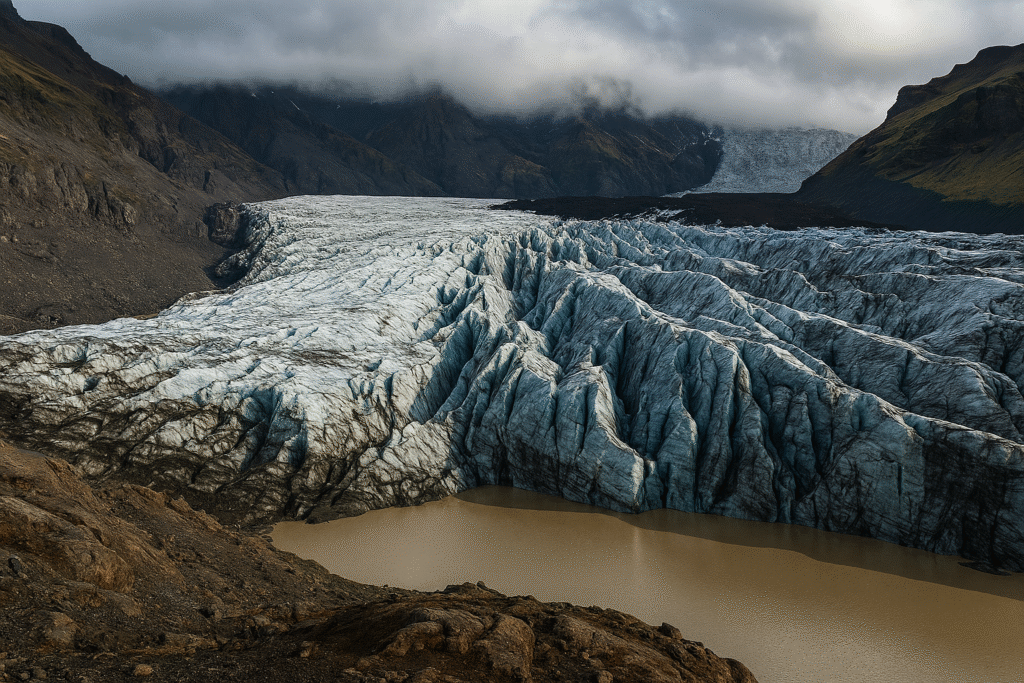
Under the policy, which takes effect June 1, 2026, popular glaciers such as Svínafellsjökull and Jostedalsbreen will be closed to foot traffic, drone flights, and commercial tours daily from 6 a.m. to 10 a.m. and again from 8 p.m. to midnight. Authorities describe these windows as the “thermal transition periods,” when temperature-driven expansion and contraction generate internal tension within the ice. Early trials conducted in Iceland last year indicated that reducing external vibrations during these hours decreased microfracture activity by nearly five percent.
Environmental ministries from the participating nations issued a joint statement emphasizing that the decision is motivated not only by conservation, but by public safety. “Glaciers are creaking, collapsing, and calving at higher rates than ever recorded,” the statement said. “Excessive human presence during unstable periods increases risk to both visitors and the formations themselves.”
Tour operators across the region are bracing for what they call “a complicated summer.” Many rely on sunrise excursions and late-evening photo tours timed to capture high-contrast light on the ice. Industry groups argue that losing access during prime viewing hours will compress visitor demand into the middle of the day, straining parking areas, guides, and rescue services. Several operators are urging governments to reconsider drone restrictions, noting that aerial photography has become a primary source of revenue.
Scientists involved in drafting the policy maintain that the acoustic concerns are real. Researchers have recorded increasing instances of what they call “anthropogenic ice chatter,” subtle vibrations generated by footsteps, equipment, and engine noise that travel surprisingly far through frozen ground. While not catastrophic on their own, the vibrations appear to interact with internal stress points, contributing to earlier seasonal cracking. “Think of it like tapping an already stretched rubber band,” one glaciologist said. “It won’t snap from the tap alone, but you aren’t helping.”
Public reaction across the Nordic region has been largely supportive. A recent survey by a Finnish environmental nonprofit found that 68 percent of respondents favored restricting glacier access, citing climate anxiety and concerns over overtourism. Some communities near major glacier sites are even exploring timed shuttle systems to avoid midday crowding once the new rules take effect.
Still, economists warn of potential impacts on rural areas dependent on adventure tourism. Many of the towns closest to the regulated glaciers rely heavily on seasonal income, and losing key booking slots could reduce overall demand. Nordic officials say they will review the policy annually, adjusting access rules if the restrictions prove too disruptive to local economies.
For now, the coalition appears determined to proceed. “We cannot control global emissions overnight,” the joint statement read, “but we can control the volume of our own footsteps.” The first “quiet hour” closures will begin as soon as spring thaw exposes safe access routes.