
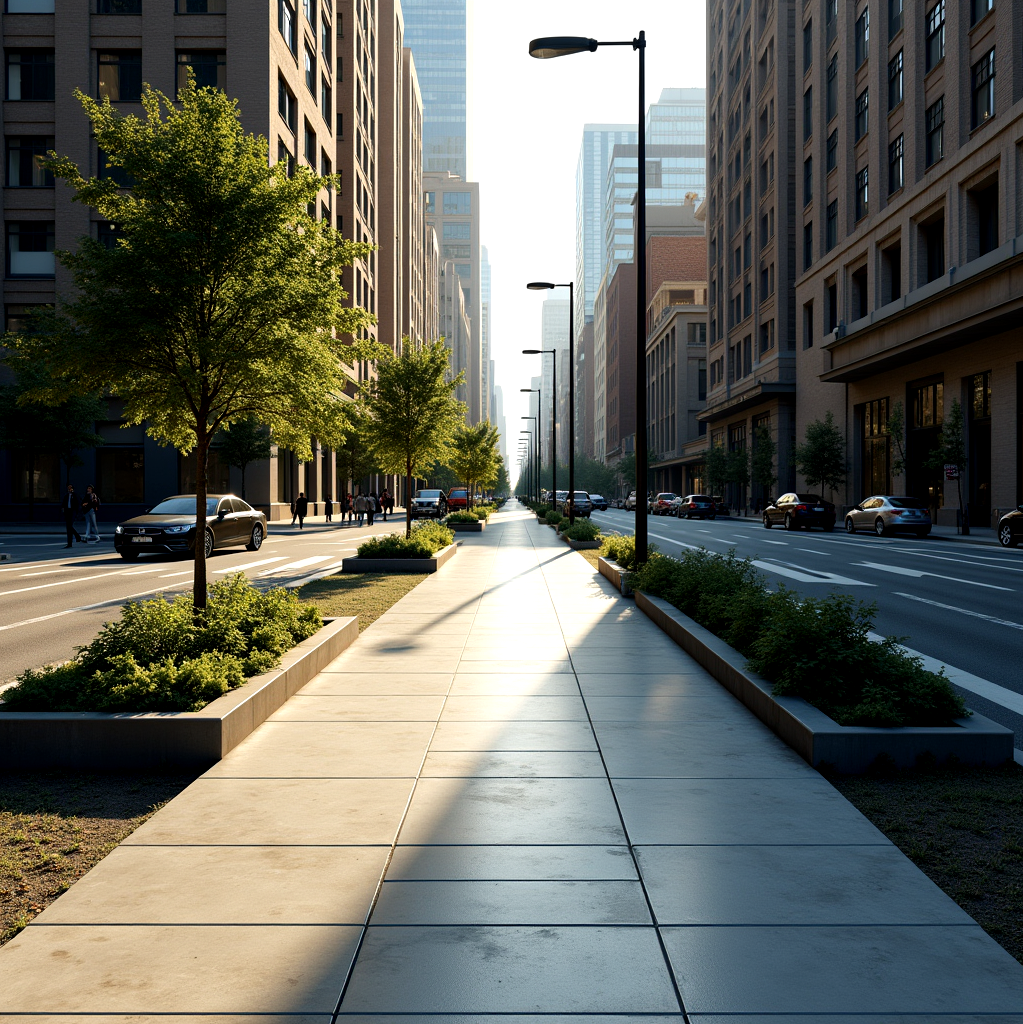
I have lived long enough to remember when sidewalks had the decency to be treacherous. A respectable pavement once possessed cracks, heaves, and the occasional malicious tilt designed to test a person’s reflexes and character. These days, however, I step outside and am confronted with something far more sinister: perfectly smooth sidewalks stretching into the distance like the polished floors of some municipal mausoleum. We have paved the path to civic blandness, and everyone is cheerfully striding along it in ergonomic shoes.
Do you know who loves perfectly even sidewalks? Joggers. People who “step out for some cardio.” They glide along these eerily flawless slabs with earbuds in, smiling to themselves as if the absence of texture beneath their feet were a sign of societal progress rather than a red flag of impending sterility. In my day, if you tried to run down the street, the sidewalk would trip you at mile one and send you home with a skinned knee and a valuable lesson about hubris. Now the pavement practically encourages them, the spineless traitor.
And let’s not pretend this is about safety. I am in favor of not breaking one’s hip as much as the next unwilling mortal, but there is a difference between reasonable maintenance and erasing all evidence that time has passed. A city ought to show its age. It should have scars, quirks, and suspicious dips that make you ask, “What happened here and who survived it?” These modern, laser-leveled walkways look like they were poured last Tuesday by a focus group. A person could live their whole life on them and never once wonder where they are, because everywhere looks the same.
The worst part is the silence. Old sidewalks spoke to you: the crunch of gravel, the slap of a loose slab, the occasional splash from a puddle that absolutely shouldn’t have existed. Now it’s just the soft, dead shff shff of shoes on immaculate concrete, the sound of a city being gradually muted. One day we will all wake up and discover that nothing in town makes a noise anymore—not the streets, not the buildings, and certainly not the people who have been walking on frictionless flooring for so long they’ve forgotten how to complain properly.
If you ask me, every perfectly even sidewalk ought to be legally required to contain at least one unpredictable tilt and two morally questionable cracks per block. Not enough to injure, mind you—just enough to remind people that the ground is not a customer service department. Until then, I shall continue shuffling along these municipal skating rinks, longing for the honest treachery of a good, old-fashioned trip hazard.